

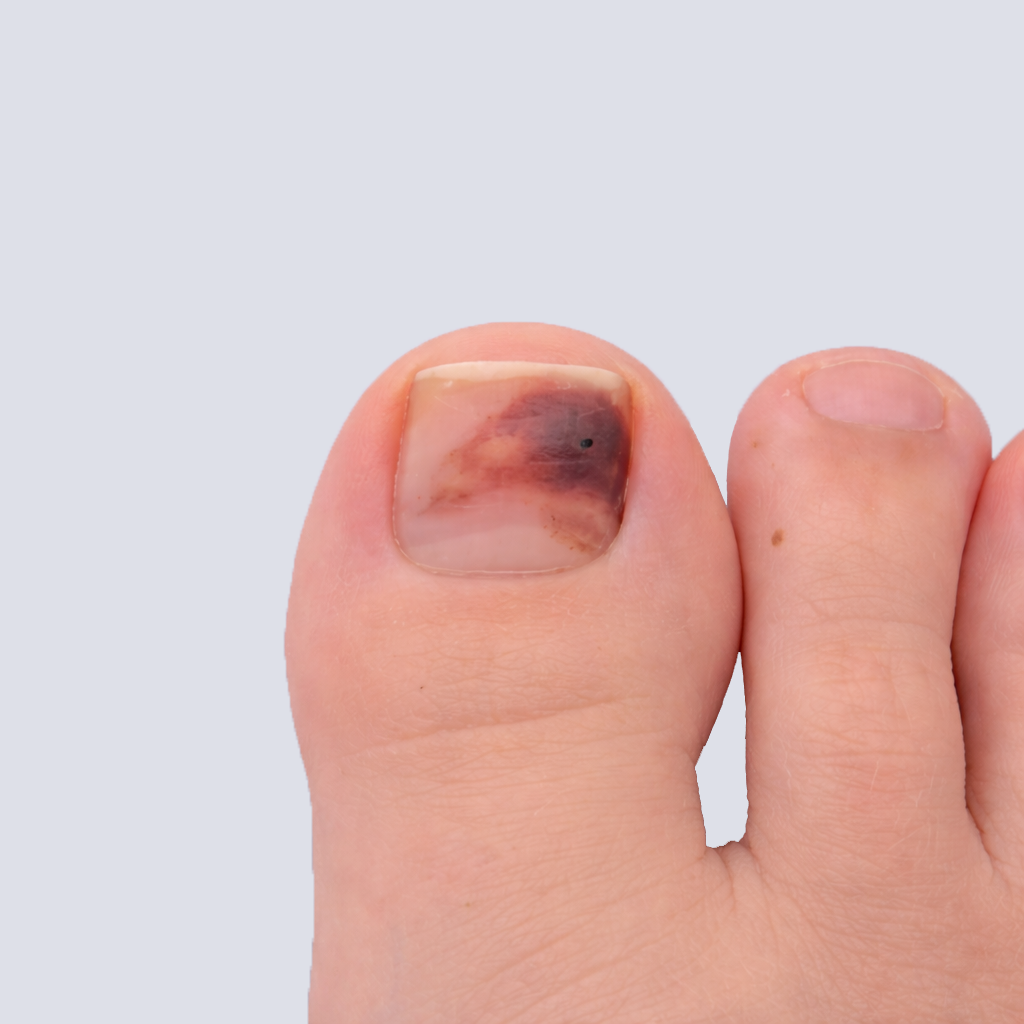
Nail Injury / Subungual Haematoma
Toenail injury is a common occurrence and may be caused by direct trauma, pressure from footwear, or repeated minor injuries (e.g. in athletes). In many cases, it leads to bleeding beneath the nail (subungual haematoma), which may cause pain, discoloration, or even detachment of the nail.
Causes of Nail Injury and Haematoma
1. Direct trauma
– Dropping a heavy object onto the nail.
– Impact against a hard surface.
2. Repetitive microtrauma from sports activities
– Common in runners, football players, and hikers, due to continuous pressure of the shoes on the toes.
3. Tight or inappropriate footwear
– Shoes that compress the toes may cause nail injury and haematoma.
4. Repeated pressure
– This occurs in people who walk a lot or stand for many hours.
5. Onychogryphosis or curved nails
– Abnormal nail growth may increase the likelihood of injury.
Symptoms
– Dark red, blue, or black discoloration under the nail (subungual haematoma).
– Pain and tenderness in the nail and toe.
– Possible nail detachment if the injury is severe.
– Swelling and inflammation around the nail, especially if infection is also present.
Management and Treatment
1. Home treatment for mild injuries
– Cryotherapy: Applying ice to the area for 10–15 minutes, several times a day, to reduce pain and swelling.
– Elevation of the foot: Helps reduce swelling.
– Avoidance of tight shoes that may place additional pressure on the injured nail.
– Pain relief medication (e.g. ibuprofen or paracetamol) if the pain is significant.
2. Treatment for severe subungual haematomas
– Drainage of the haematoma (only by a specialist): If the haematoma causes significant pain, a podiatrist may perforate the nail to release the blood and relieve the pressure.
– Antibiotics if there are signs of infection (redness, swelling, pus).
– Protective splint or dressing to stabilise the nail.
– If the nail detaches, the area should be kept clean and the new nail growth should be monitored.
Prevention of Nail Injuries
– Maintaining the nails at the proper length.
– Using appropriate footwear with sufficient room for the toes.
– Use of orthotic insoles, which help maintain the correct position of the foot inside the shoe.
When to Visit the Podiatrist
– If the haematoma is extensive, as drainage, ideally within 48 hours of the injury, helps reduce the likelihood of nail detachment.
– If the pain is severe and does not improve.
– If the nail appears to be detaching completely.
– If there are signs of infection (redness, swelling, fluid discharge, unpleasant odour).
– If the nail does not return to its normal condition after a few weeks.
Toenail injuries and subungual haematomas are common conditions that may cause pain and temporary nail deformity. With proper care, appropriate footwear, and timely treatment by a podiatrist when necessary, symptoms can be relieved effectively and complications can be prevented.