
Pes Cavus
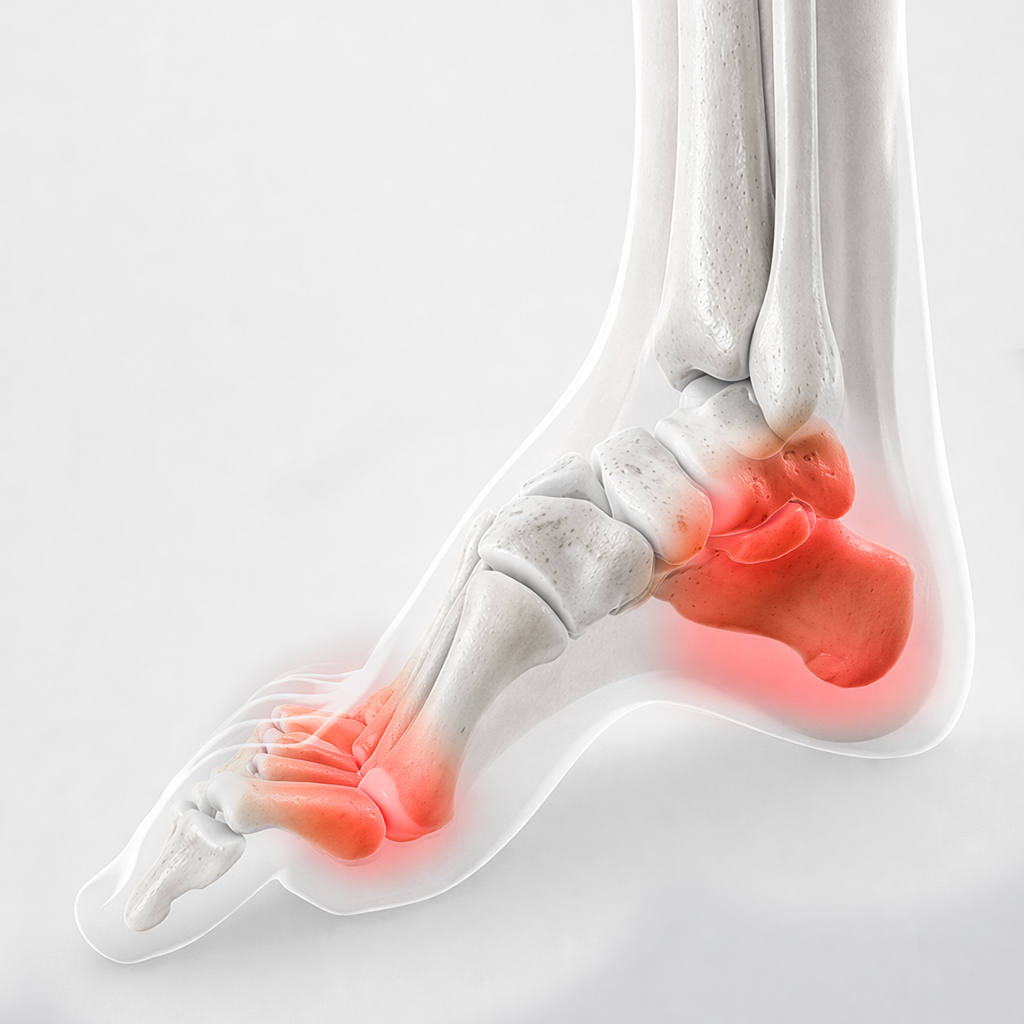
Pes cavus is a condition of the foot in which the arch is excessively high, resulting in body weight being distributed mainly across the metatarsal region and the heel. This may lead to instability, pain, and an increased risk of injury.
Causes and Risk Factors
Pes cavus may be hereditary (idiopathic) or may develop as a result of neurological or musculoskeletal disorders.
1. Genetic factors
– It often occurs in families with a history of pes cavus.
2. Neurological disorders
– Conditions such as Charcot–Marie–Tooth disease, cerebral palsy, and muscular dystrophy may lead to an excessively high arch.
3. Injuries or muscular imbalances
– Damage to nerves or muscles that affects the shape of the foot.
4. Developmental or degenerative conditions
– Arthritis or tendon dysfunction that alters the distribution of forces in the foot.
Symptoms
– An excessively high arch, which may be visible even when the foot is at rest.
– Foot pain, especially in the metatarsal region, the toes, or the ankle.
– Instability while walking due to a reduced support surface.
– Increased pressure on the metatarsals and the heel, which may cause calluses or ulcers.
– Stiffness and reduced flexibility of the foot.
– Frequent ankle sprains due to reduced balance.
– Muscle weakness or toe deformities (e.g. hammer toes, claw toes).
Diagnosis
Diagnosis is made by a podologist-podiatrist or an orthopaedic specialist through:
– Clinical examination to assess the structure and mobility of the foot.
– Plantar pressure assessment to evaluate weight distribution.
– X-rays or CT scan, if there is suspicion of an underlying pathological cause.
– Neurological testing, if pes cavus is associated with neuropathies.
Management and Treatment
Treatment depends on the severity of pes cavus and on whether it is associated with neurological or musculoskeletal disorders.
– Orthotic insoles, which help reduce pressure and improve stability.
– Special footwear with shock absorption and good arch support.
– Physiotherapy
– Exercises to strengthen the foot muscles and improve balance.
– Stretching exercises to reduce stiffness.
– Avoidance of high heels and rigid footwear that increase pressure on the metatarsals.
Prevention
– Assessment by a podologist-podiatrist if there are early signs of pes cavus.
– Proper choice of footwear with support and shock absorption.
– Avoidance of activities that place excessive strain on the feet, if there is a predisposition to pain or injury.
– Regular stretching and strengthening of the plantar muscles to maintain function.
When to Visit the Podiatrist
– If pes cavus causes chronic pain or difficulty walking.
– If there is instability or frequent ankle injuries.
– If symptoms worsen over time.
– If there is suspicion of a neurological disorder, especially if muscle weakness or gait asymmetry is observed.
Pes cavus may significantly affect gait and quality of life, but with proper diagnosis and treatment, symptoms can be managed effectively. If you are experiencing problems with the arch of your foot or the way you walk, consultation with a podiatrist or orthopaedic specialist is essential for proper management of the condition.