
Corns / Calluses
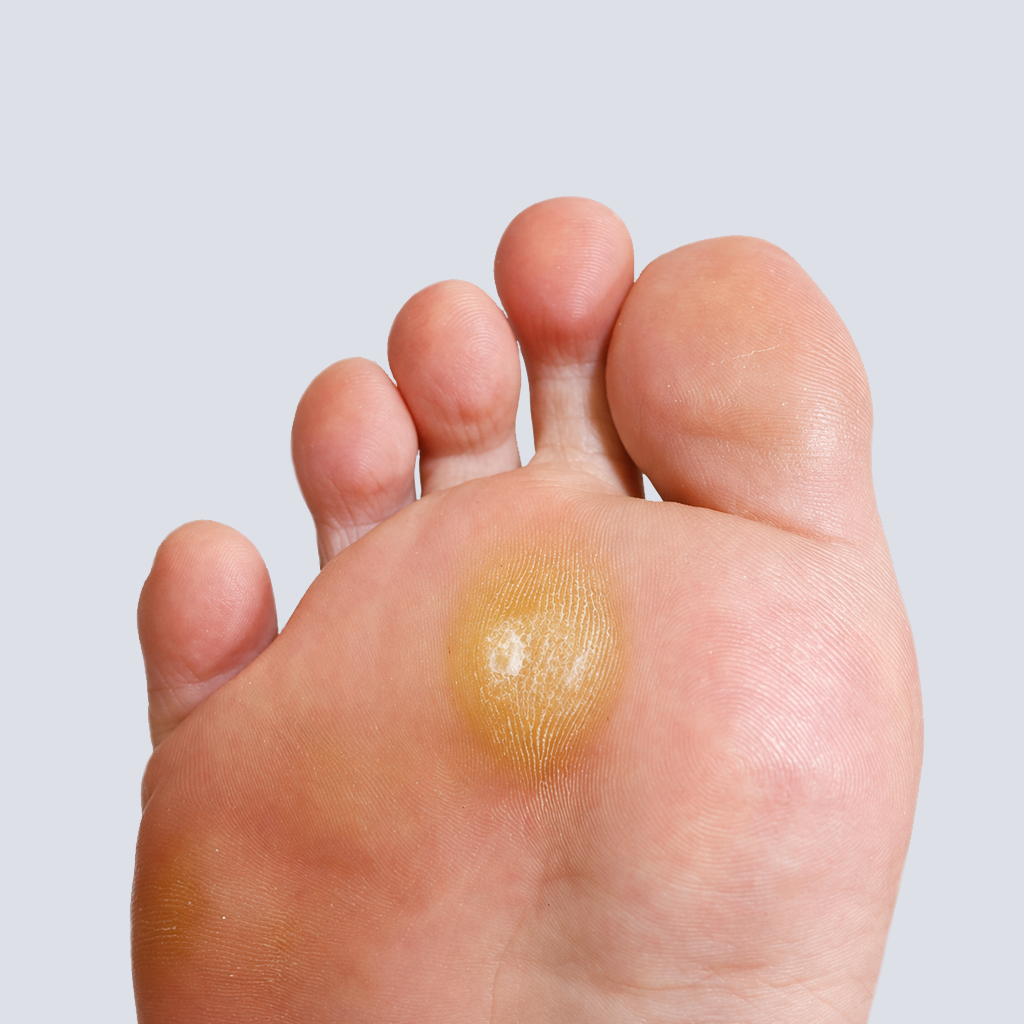
Corns and calluses are common skin conditions that develop on the feet due to excessive friction or pressure. Although they are often confused, there are some key differences between them. Calluses are larger, flatter, and usually painless areas of thickened skin. Corns, on the other hand, are smaller, harder, and may cause pain, as they extend deeper into the skin, forming a cone-shaped core.
Causes
The main factors that lead to the development of calluses and corns include:
– Inappropriate footwear, such as high heels, tight shoes, or shoes with thin soles.
– Foot deformities, such as bunions, dropped metatarsal heads, claw toes, and hammer toes, which increase pressure on specific areas.
– Prolonged standing or intense physical activity.Symptoms
Common symptoms include:
– Thickening and hardening of the skin in areas exposed to increased pressure.
– Mild to severe pain, especially when pressure is applied to the area. As a result, changes in gait may occur as the person tries to offload the painful spot, which can lead to overuse, strain, or pain in other parts of the body.
– In some cases, redness and inflammation around the affected area.Treatment Options
Proper treatment may include:
– Appropriate footwear: Choose comfortable shoes that provide good support.
– Protective pads or orthotic devices: These help reduce friction and pressure.
– Podiatric care: A qualified podiatrist can safely remove calluses and corns without damaging the healthy surrounding skin.
– Custom orthotic insoles: These help distribute pressure more evenly and relieve stress on the affected area.When to Visit a Podiatrist
If calluses or corns cause significant pain, show signs of infection, or do not improve, it is important to consult a podiatrist. Special attention is needed for individuals with diabetes, autoimmune diseases, or circulatory problems, as the risk of complications is increased.
Corns and calluses are common foot skin conditions, mainly associated with increased pressure and friction. With appropriate podiatric care, proper footwear selection, and, when necessary, the use of orthotic insoles, they can be managed effectively and their recurrence can be prevented.