

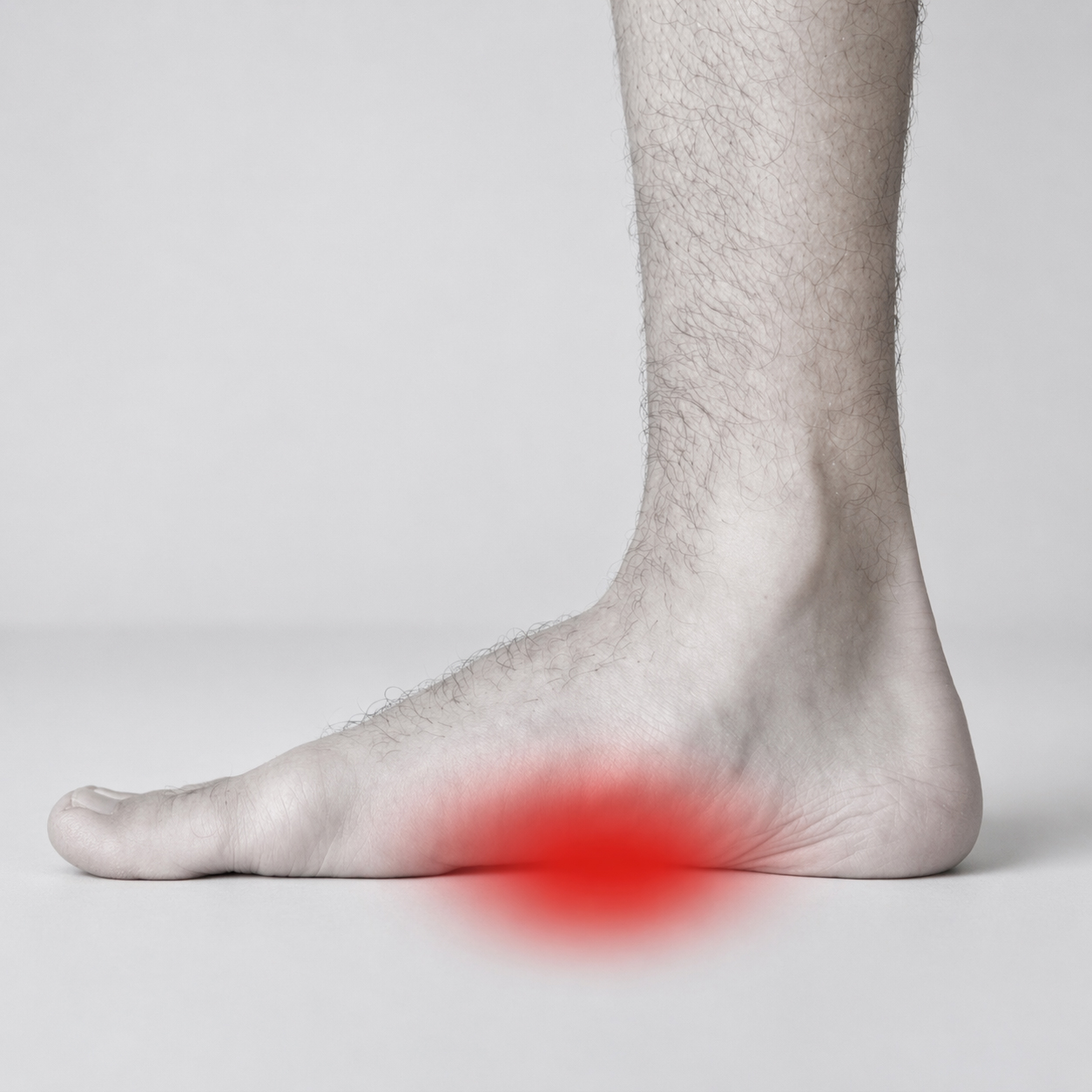
Flat Feet
Flat feet is an anatomical condition in which the sole of the foot has a low or absent arch, resulting in almost the entire foot coming into contact with the ground. It may be either congenital (present from birth) or acquired, developing gradually with age or as a result of injuries and medical conditions.
Types of Flat Feet
1. Flexible flat feet: The arch is visible when the foot is not bearing weight, but disappears when the foot is placed on the ground. This is the most common form and is often seen in children.
2. Rigid flat feet: The arch is absent even when the foot is not weight-bearing. It is often associated with stiffness and pain.
3. Adult-acquired flatfoot: This develops as a result of injuries, tendon disorders, or degenerative changes, such as rupture of the posterior tibial tendon.
Causes and Risk Factors
– Heredity: Flat feet may have a genetic predisposition.
– Loose ligaments and weak muscles in the feet.
– Obesity, which increases strain on the feet.
– Injuries or medical conditions (tendon rupture, arthritis, neurological disorders).
– Use of inappropriate footwear.
– Ageing, as ligament elasticity decreases over time.
Symptoms
– Pain or fatigue in the feet, especially after walking or prolonged standing.
– Swelling in the ankle or in the arch of the foot.
– Difficulty walking or performing activities that require balance.
– Ankle instability and an increased likelihood of injury.
– Pain in the knees, hips, or lower back due to poor body alignment.
Diagnosis
– Physical examination by a podiatrist or orthopaedic specialist.
– Plantar pressure assessment.
– X-rays or MRI if there is suspicion of bone or tendon pathology.
Management and Treatment
– Orthotic insoles to improve arch support.
– Appropriate footwear.
– Physiotherapy and specific exercises to strengthen the muscles of the foot and ankle.
– Weight management, to reduce strain on the feet.
– Avoidance of prolonged standing or intense activities without appropriate foot support.
Prevention
– Use of proper footwear from an early age.
– Strengthening of the feet through balance and stretching exercises.
– Regular assessment by a podiatrist, especially if there are symptoms or a family history.
When to Visit the Podiatrist
– If flat feet cause pain or difficulty walking.
– If there is swelling or instability in the ankle.
– If you notice changes in gait or pain in the knees, hips, or lower back.
Flat feet is a common condition that may affect gait, posture, and the overall function of the foot. With appropriate assessment, proper support, and timely intervention, symptoms can be managed effectively and further complications can be prevented.