
Morton’s Neuroma
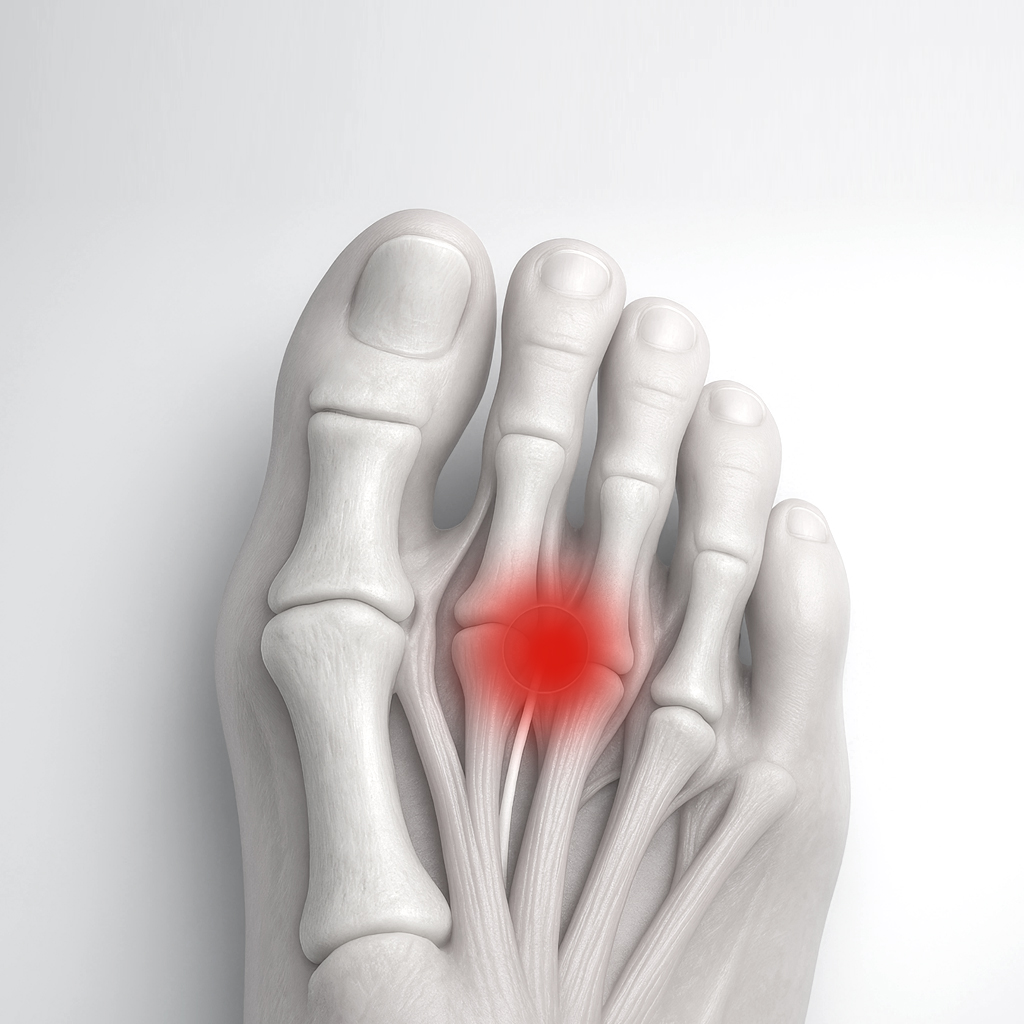
Morton’s neuroma is a benign thickening (formation of fibrous tissue) of the common plantar digital nerve located in the forefoot. It most commonly occurs between the 3rd and 4th metatarsals and causes pain, a burning sensation, and numbness during walking or when wearing tight shoes.
Causes and Risk Factors
Morton’s neuroma is caused by repeated pressure or irritation of the nerve, leading to thickening and inflammation of the fibrous tissue surrounding it.
1. Variations in foot mechanics
– Flat feet or pes cavus, which affect proper pressure distribution across the foot.
– Toe deformities (e.g. hammer toes, hallux valgus), which create additional pressure on the nerve.
2. Inappropriate footwear
– Tight or narrow-toed shoes, which compress the toes together.
– High heels, which increase pressure on the forefoot.
3. Prolonged strain
– Running, dancing, or sports involving repetitive jumping, which increase friction around the nerve.
– Prolonged standing, especially on hard surfaces.
4. Injuries and inflammation
– Previous foot injuries that may have caused scar tissue to form around the nerve.
Symptoms
– Pain in the forefoot, often described as burning or stabbing pain.
– A sensation that there is a small “pebble” inside the shoe.
– Numbness or tingling in the toes, especially in the 3rd and 4th toes.
– Worsening of the pain when wearing tight shoes or after prolonged walking.
– Relief when removing the shoes or massaging the foot.
Diagnosis
Diagnosis is made through:
– Clinical examination, during which the podiatrist presses on the area to assess pain and tenderness.
– Mulder’s sign: Pressure is applied to the forefoot, and a characteristic click may be elicited if a neuroma is present.
– Imaging tests:
Ultrasound, to detect thickening of the nerve.
Magnetic resonance imaging (MRI), if symptoms are severe or the diagnosis is unclear.
Management and Treatment
1. Conservative methods
– Footwear modification
– Choosing wide shoes with soft soles that do not compress the toes.
– Avoiding tight, narrow-toed, or high-heeled shoes.
– Orthotic insoles, which help restore proper foot alignment and offload the affected area.
– Physiotherapy and stretching
Exercises to strengthen the foot and improve support.
Heat therapy or massage, to relax the plantar muscles.
– Avoidance of excessive strain and adjustment of activities.
– Anti-inflammatory medication (ibuprofen, naproxen) for temporary pain relief.
2. Minimally invasive treatments
– Cortisone injections: These provide relief from inflammation, but they are not a permanent solution.
– Alcohol injections (Alcohol Sclerosing Therapy): A sclerosing treatment that gradually reduces the size of the neuroma.
3. Surgical treatment (in severe or persistent cases)
When conservative treatments fail and the pain significantly affects daily life, surgical removal of the neuroma may be required.
Prevention
– Choosing appropriate footwear: comfortable, with good support and enough room for the toes.
– Regular rest and stretching to avoid excessive strain on the feet.
– Use of orthotic insoles if there is predisposition or anatomical variation in the forefoot.
– Avoidance of prolonged use of tight or high-heeled shoes.
When to Visit the Podiatrist
– If the pain persists for more than 2–3 weeks despite footwear changes.
– If there is marked numbness or a burning sensation in the forefoot.
– If the sensation of a “stone in the shoe” becomes increasingly intense.
– If the pain makes walking difficult or affects your daily life.
Morton’s neuroma is a painful but treatable condition. Conservative treatments are often effective, while in advanced cases, surgery may provide a definitive solution.