
Achilles Tendinitis
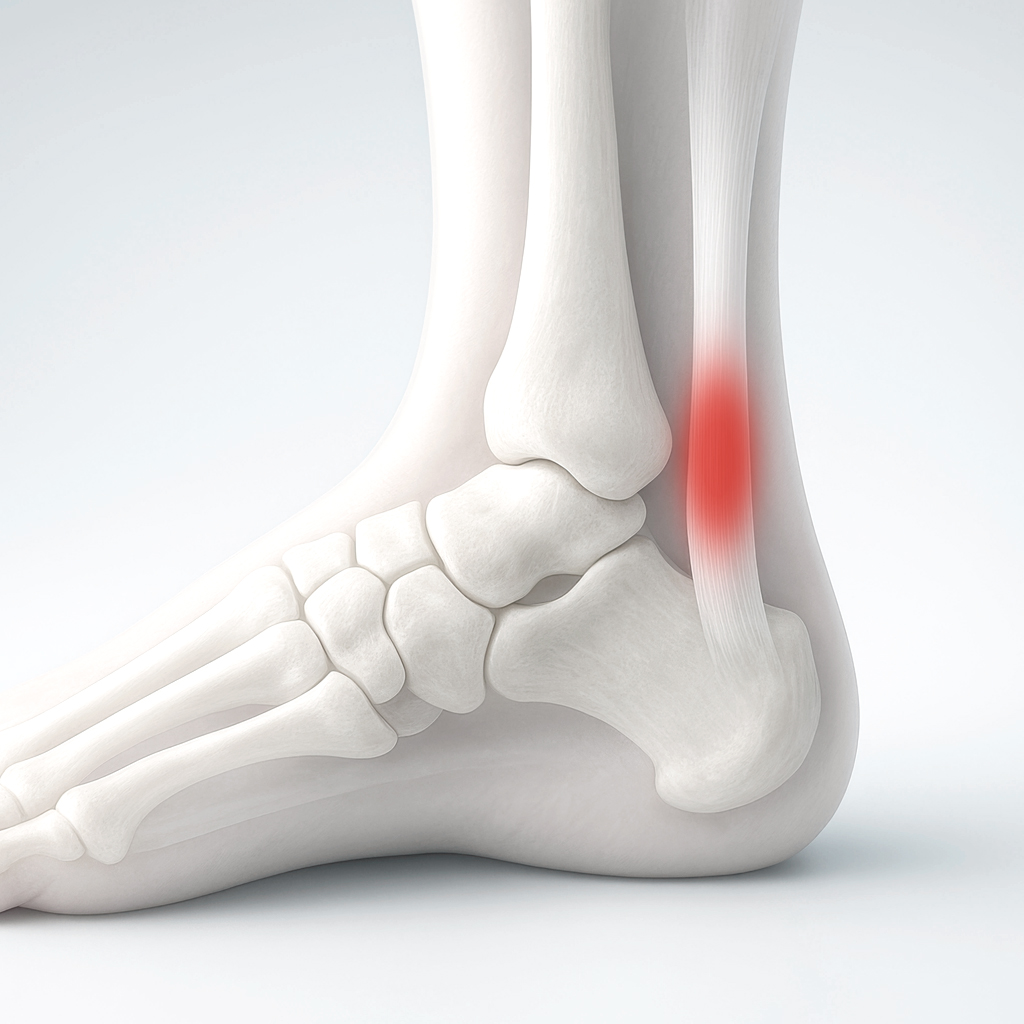
Achilles tendinitis is a degenerative inflammatory condition of the Achilles tendon, the strong tendon that connects the gastrocnemius muscle (calf) to the back of the heel. It is caused by chronic overuse, microtrauma, or poor foot mechanics and leads to pain in the back of the foot, near the heel. It may affect either the mid-portion of the tendon or the point where it inserts into the heel. It is common in runners, athletes, and individuals who suddenly increase their level of physical activity.
Causes and Risk Factors
1. Excessive strain & poor biomechanics
– Sudden increase in the intensity or duration of exercise (e.g. running, jumping).
– Poor gait mechanics or excessive pressure on the Achilles tendon.
2. Inappropriate footwear
– Shoes that do not provide shock absorption increase stress on the tendon.
– High heels, which reduce tendon flexibility and place strain on it when returning to flat shoes.
3. Anatomical and biomechanical abnormalities
– Flat feet or pes cavus, which increase strain on the tendon.
– Tight calf muscles (gastrocnemius), which restrict movement and increase pressure on the Achilles tendon.
4. Age & degenerative changes
– More common in people over the age of 40, as tendons lose elasticity.
– Chronic microtrauma, causing gradual degeneration of the tendon (tendinopathy).
Symptoms
– Pain at the back of the heel or slightly above it, especially in the morning or after rest.
– Pain during exercise or after physical activity.
– Stiffness and difficulty moving the foot, particularly after rest.
– Swelling or local redness in the area of the Achilles tendon.
– A “creaking” sensation or sound during tendon movement (in severe cases).
Diagnosis
Diagnosis is made through:
– Clinical examination, during which pain and tenderness of the tendon are assessed.
– Thompson test, to check for Achilles tendon rupture.
– Ultrasound or Magnetic Resonance Imaging (MRI), if there is suspicion of a partial tear or chronic tendinopathy.
Management and Treatment
1. Conservative Methods (for mild to moderate cases)
– Rest and avoidance of activities that worsen the pain.
– Cryotherapy (ice for 15–20 minutes, 3–4 times a day) to reduce inflammation.
– Footwear modification
Shoes with good shock absorption.
Avoidance of flat shoes or sudden transition from heels to flat footwear.
– Use of orthotic insoles with heel elevation to reduce tension on the tendon.
– Physiotherapy and stretching exercises
Stretching of the Achilles tendon and gastrocnemius muscle.
Eccentric loading exercises (heel drops), which strengthen the tendon and reduce pain.
Massage and therapeutic exercises to improve flexibility.
– Anti-inflammatory medication (ibuprofen, naproxen) for temporary relief.
2. Injectable Therapies (in chronic cases)
– PRP (Platelet-Rich Plasma) injection, which promotes tendon healing.
– Cortisone injection (rarely preferred, as it may weaken the tendon).
3. Surgical treatment (in severe cases)
If the tendinitis persists for more than 6 months despite conservative treatment, surgery may be required.
Prevention
– Warm-up and stretching before exercise.
– Avoidance of sudden increases in training intensity or duration.
– Wear appropriate footwear that provides support and shock absorption.
– Regular stretching and strengthening of the calf muscles to reduce load on the tendon.
– Avoidance of prolonged walking or running on hard surfaces.
When to Visit the Podiatrist
– If the pain persists for more than 2 weeks despite rest.
– If there is marked stiffness or swelling in the tendon.
– If you experience sudden, severe pain or hear a “snapping” sound in the tendon (possible rupture).
– If the pain makes walking or exercise difficult.
Achilles tendinitis can significantly affect daily life, but with early diagnosis and proper treatment, symptoms can be managed effectively. Prevention through proper training, stretching, appropriate footwear, and orthotic insoles is key to avoiding recurrence.