
Posterior Tibial Tendinitis / Dysfunction
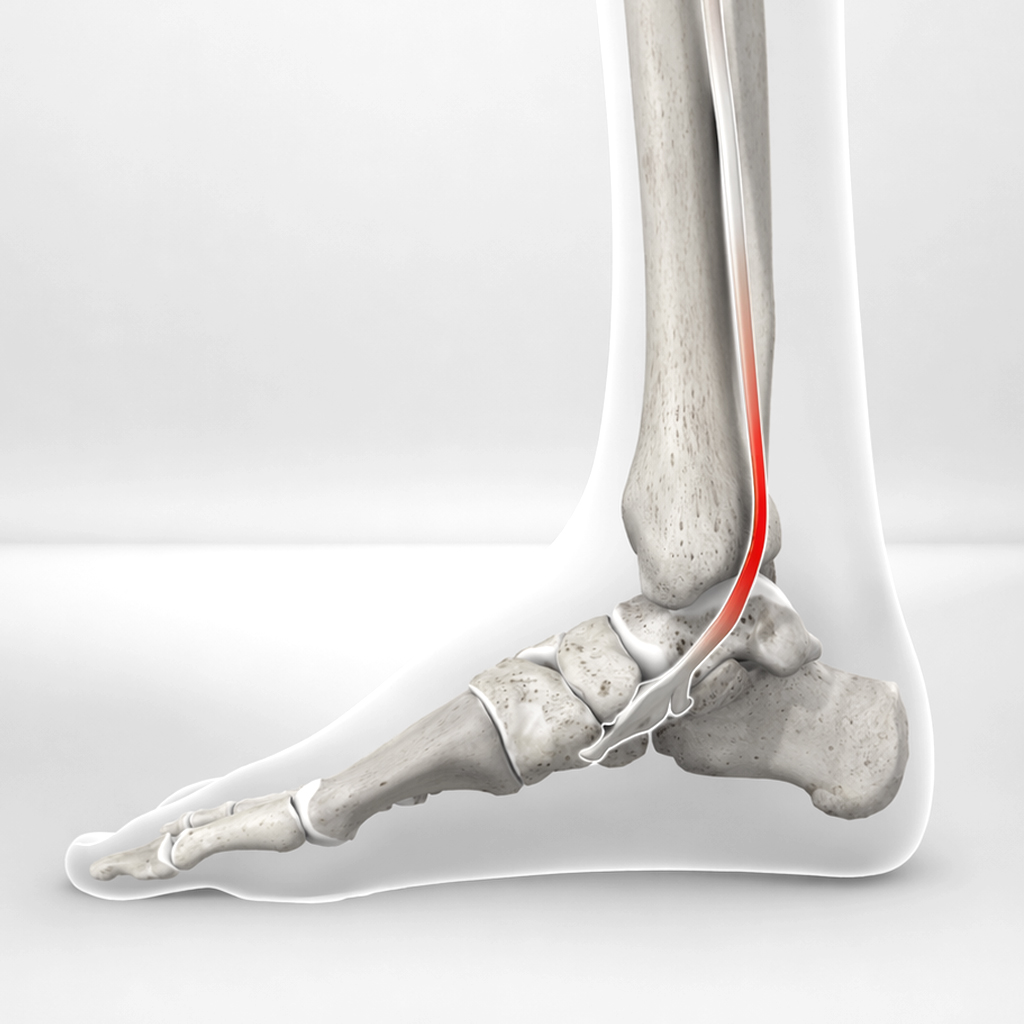
Posterior tibial tendinitis is an inflammation and/or degeneration of the tendon located on the inner side of the ankle. If not treated early, it may lead to posterior tibial tendon dysfunction, a condition that causes flatfoot deformity and difficulty walking.
Causes and Risk Factors
1. Overuse and injuries
– Prolonged standing or intense physical activity (e.g. running, jumping).
– Poor foot mechanics causing increased load on the tendon.
– Repetitive microtrauma or direct injuries to the ankle or foot.
2. Structural and anatomical abnormalities
– Flat feet, which increase strain on the tendon.
– An excessively flexible arch, which weakens support of the foot.
3. Degenerative and systemic conditions
– Age: The tendon undergoes natural wear over time.
– Arthritis, which affects foot stability.
– Diabetes mellitus and obesity, which increase the risk of tendon degeneration.
Symptoms
1. Posterior Tibial Tendinitis (Early Stage)
– Pain along the inner side of the ankle and the foot.
– Tenderness and swelling on the inside of the ankle.
– Difficulty raising the heel (e.g. when standing on tiptoe).
2. Posterior Tibial Tendon Dysfunction (Advanced Stage)
– Progressive collapse of the arch of the foot (adult-acquired flatfoot).
– Pain extending to the outer side of the ankle due to imbalance.
– Difficulty walking or standing for long periods.
– Foot deformity.
Diagnosis
Diagnosis is made through:
– Clinical examination, during which tendon mobility and strength are assessed.
– Single Heel Raise Test: Inability to perform the test suggests tendon dysfunction.
– Ultrasound or Magnetic Resonance Imaging (MRI), to identify possible tendon tear or degeneration.
Management and Treatment
1. Conservative Methods (For Mild to Moderate Cases)
– Rest and avoidance of intense activities.
– Cryotherapy (ice for 15–20 minutes, 3–4 times a day) to reduce inflammation.
– Anti-inflammatory medication (ibuprofen, naproxen) to reduce pain.
– Use of specialised footwear or orthotic insoles.
– Insoles with arch support to reduce pressure on the tendon.
– Use of a brace or walking boot in severe cases for temporary immobilisation.
– Physiotherapy and strengthening exercises
– Stretching of the posterior tibial tendon and calf muscles.
– Eccentric exercises to improve tendon strength and endurance.
– Balance and foot stabilisation exercises for better weight distribution.
2. Minimally invasive treatments (if the condition does not improve)
– PRP (Platelet-Rich Plasma) injections, which help promote tendon healing.
– Cortisone injection: Caution is required, as it may weaken the tendon.
3. Surgical Treatment (in severe cases of dysfunction)
When the tendon has undergone severe degeneration or rupture, surgery may be required.
Prevention
– Avoidance of excessive strain on the foot, especially during sports activities.
– Use of appropriate footwear with good arch support.
– Regular stretching and strengthening exercises to maintain tendon resilience.
– Weight management, to reduce pressure on the tendon and the arch of the foot.
When to Visit the Podiatrist
– If the pain persists for more than 2 weeks despite rest and conservative treatment.
– If there is progressive foot deformity or difficulty walking.
– If the pain affects your daily life and activities.
– If you feel weakness or instability while walking or when rising onto your toes.
Posterior tibial tendinitis is a condition that can be managed effectively if diagnosed early. In the early stages, conservative treatments help restore function, while in more advanced cases, surgical intervention may be necessary.