
Skip to content
espa banner
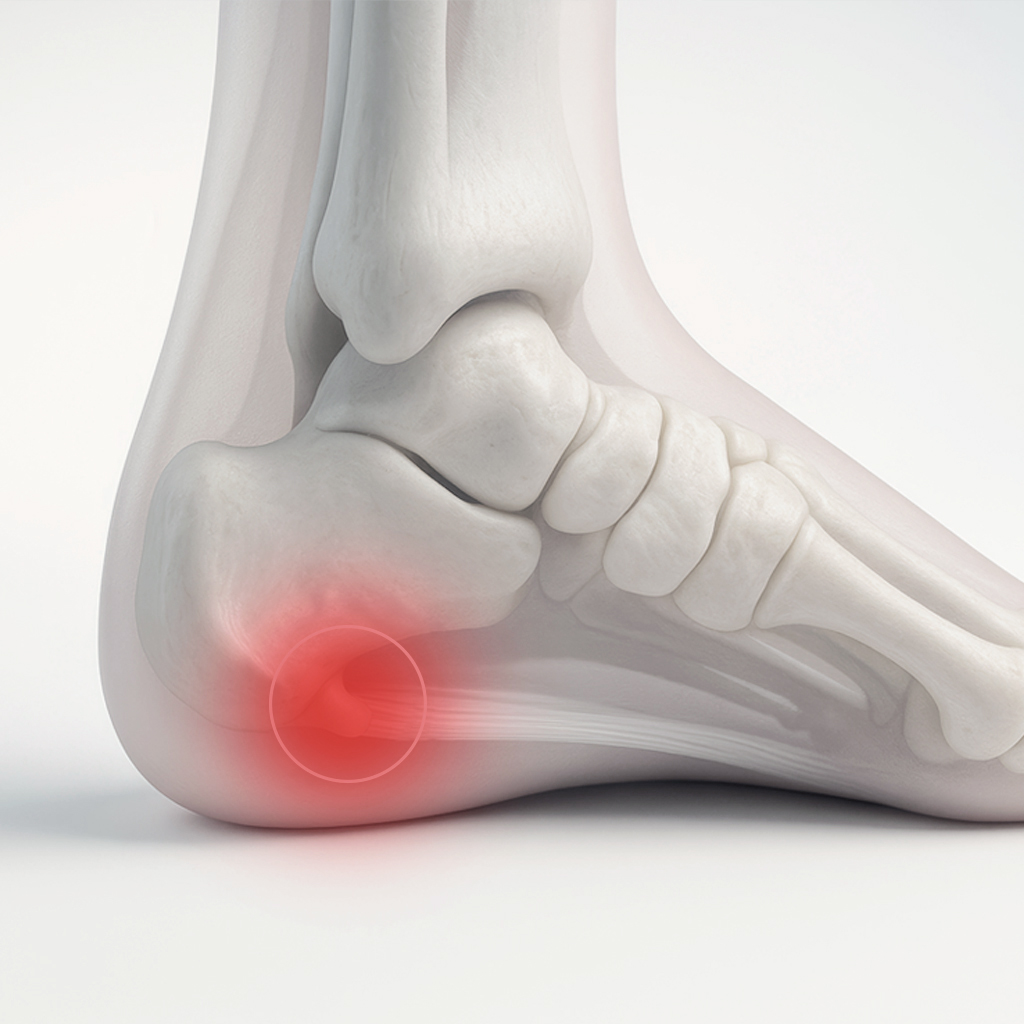
Heel spur featured image

Heel spur

A heel spur is a bony outgrowth on the underside of the heel, which may cause significant pain and discomfort. It is commonly associated with plantar fasciitis and is caused by chronic strain on the plantar fascia.

Causes and Risk Factors

A heel spur develops due to repetitive traction at the insertion of the plantar fascia and/or inflammation, which leads to calcium deposition at the base of the heel.

1. Excessive strain on the plantar fascia

– Continuous stress at the insertion of the plantar fascia on the heel.

– Microtrauma leading to calcium deposition.

2. Factors that increase the risk

– Prolonged standing or intense physical activity (runners, athletes).

– Flat feet or high arches, which alter weight distribution.

– Excess body weight, which increases pressure on the heel.

– Inappropriate footwear (hard soles, high heels, flat shoes without support).

– Age: Over time, tissues lose their elasticity.

– Arthritic conditions, such as rheumatoid arthritis or gout.

Symptoms

– Heel pain, especially in the morning or after prolonged inactivity.

– A sensation like a “nail” or “needle” in the underside of the heel.

– Worsening pain after walking or prolonged standing.

– In some cases, absence of symptoms, as the heel spur itself may be painless and the pain may be mainly due to inflammation of the plantar fascia.

Diagnosis

Diagnosis is made through:

– Clinical examination by a podiatrist or orthopaedic specialist.

– X-ray, which may reveal the bony outgrowth.

– Ultrasound or MRI, if extensive inflammation is suspected.

Management and Treatment

1. Conservative treatments

– Rest and avoidance of overuse.

– Cryotherapy: Ice for 10–15 minutes, 3–4 times a day, to reduce inflammation.

– Anti-inflammatory medication (ibuprofen, naproxen) for pain relief.

– Orthotic insoles to offload the heel and support the arch of the foot.

– Physiotherapy

– Stretching exercises for the plantar fascia and the Achilles tendon.

– Strengthening of the plantar muscles.

– Avoidance of hard or thin soles that do not absorb shock.

2. Minimally invasive treatments (if the pain persists)

– Cortisone injections to reduce inflammation.

– Shockwave Therapy to accelerate healing.

– Laser therapy to reduce inflammation and pain.

Prevention

– Proper footwear with good shock absorption.

– Weight management to reduce loading on the heel.

– Regular stretching of the plantar fascia.

– Avoidance of sudden increases in physical activity.

When to Visit the Podiatrist

– If the pain persists for more than 2–3 weeks.

– If there is difficulty walking or carrying out daily activities.

– If the pain continues despite conservative treatment.

A heel spur is often the result of chronic strain and can be managed with proper footwear, physiotherapy, and orthotic insoles. If the pain persists, more advanced treatment options may help support recovery.

Meet our team

Our podiatrists

Afrodite Kotsifa featured image
Afrodite Kotsifa
Podiatrist
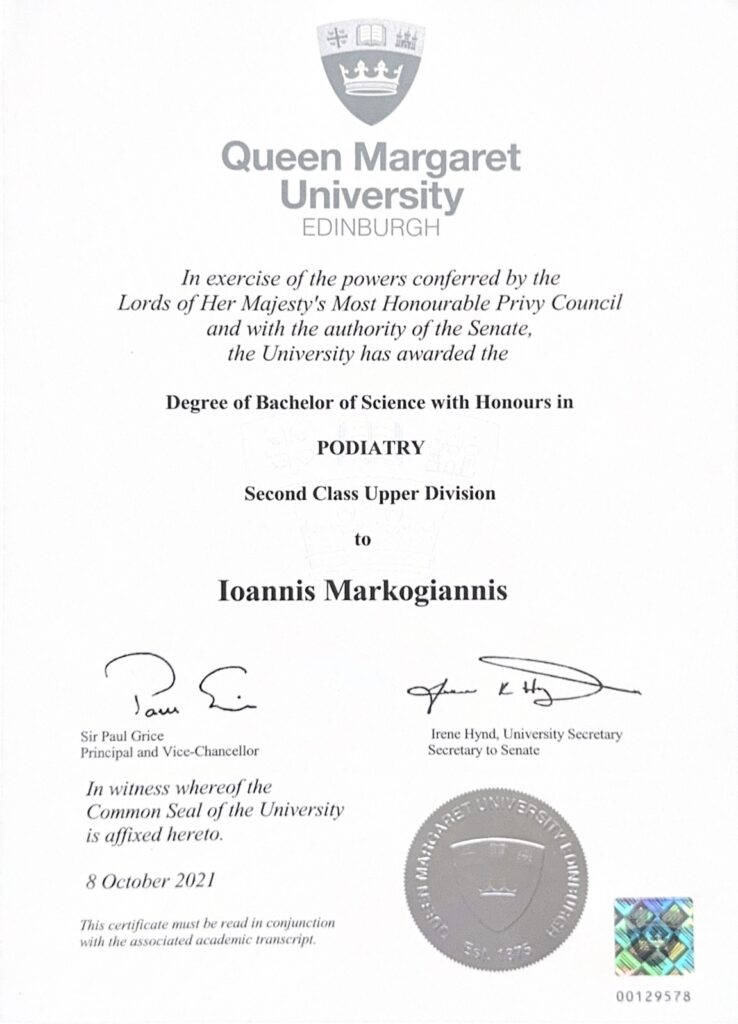
Giannis Markogiannis featured image
Giannis Markogiannis
Podiatrist
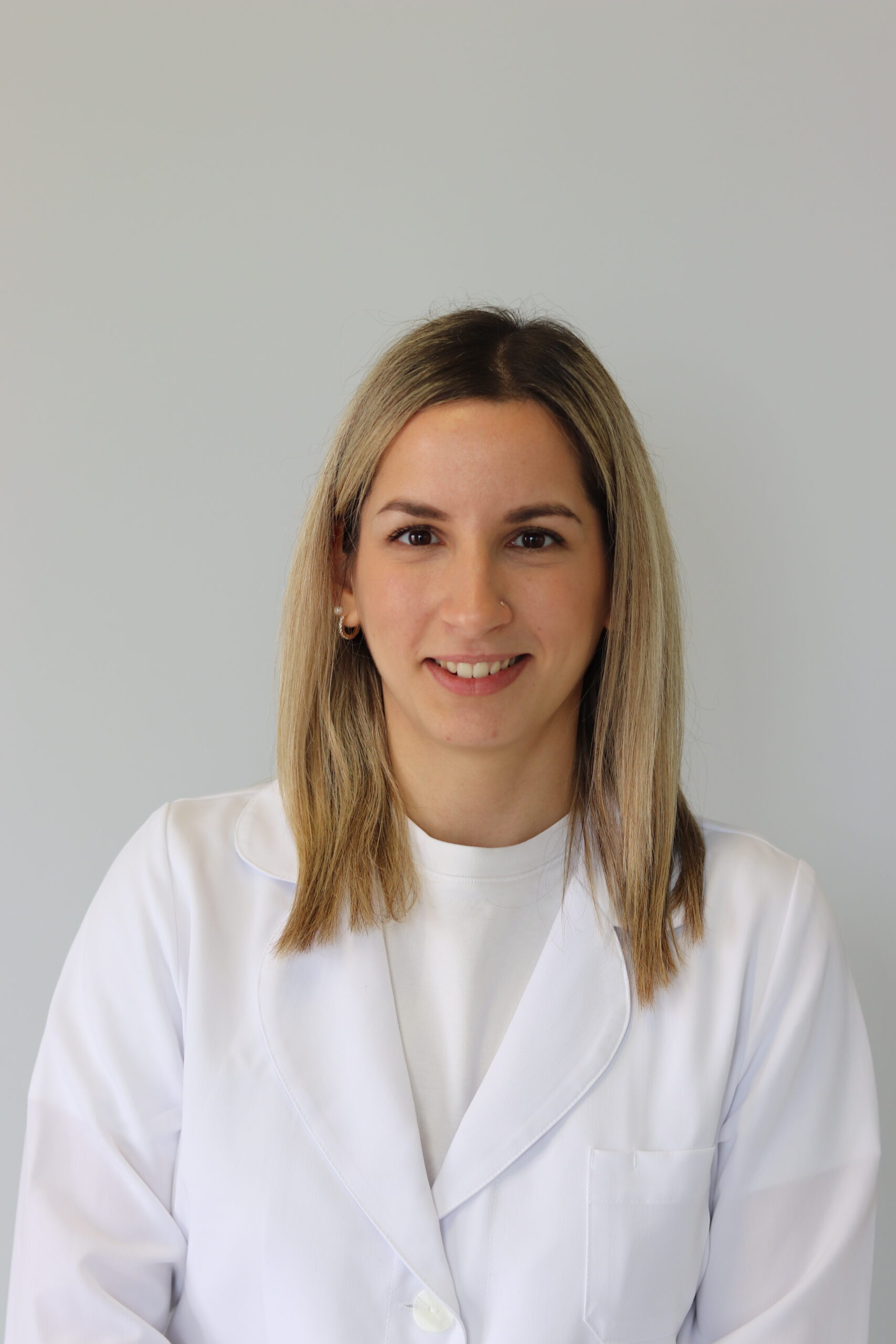
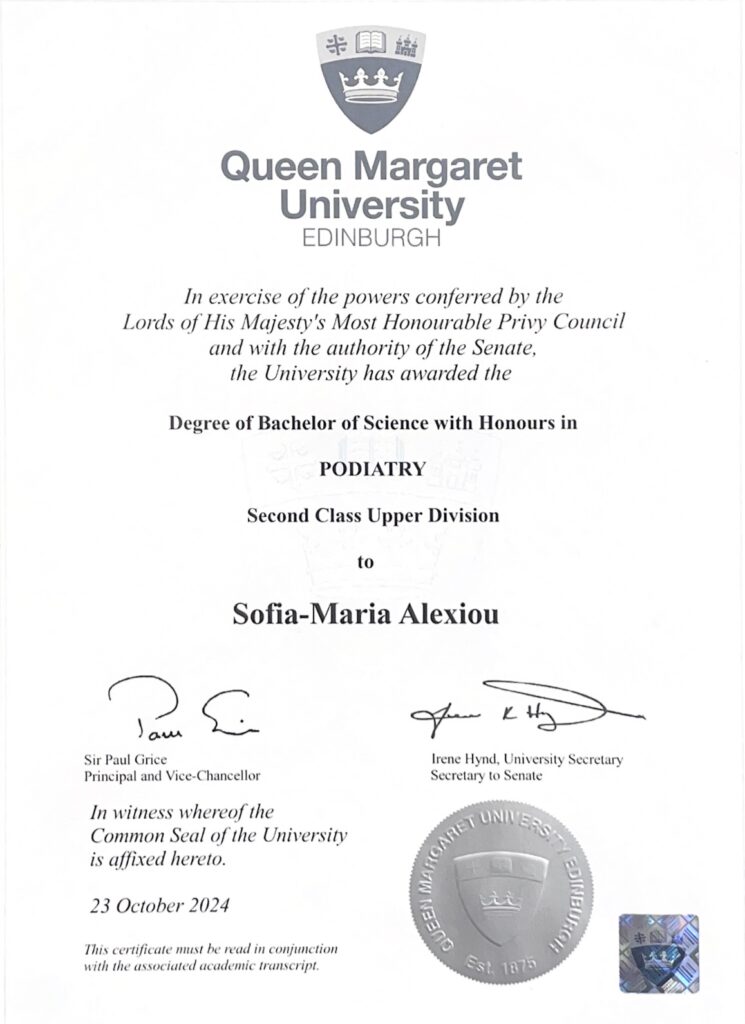
Sofia Alexiou featured image
Sofia Alexiou
Podiatrist
Afrodite Kotsifa

BSc (Hons) Podiatry, Queen Margaret University, Edinburgh | Podiatrist Assessment, prevention and treatment of lower limb conditions


Professional Profile


Podiatrist with experience in the diagnosis, prevention and treatment of lower limb conditions. Combines scientific knowledge with modern techniques to maintain foot health and functionality.
Focuses on personalized care tailored to each patient’s needs.


Education

  BSc (Hons) Podiatry, Queen Margaret University, Edinburgh | Metropolitan College, Athens | 2017 – 2021

Diploma in Foot Care & Nail Aesthetics, IEK AKMH, Athens | 2012 – 2014


Professional Experience

2025 – Present | Podcare, Chalandri

2020 – Present | Foot Care Center, Kifisia

2014 – 2020 | Athens Vascular Surgery & Athens Medical Center, Marousi Practice of Vascular Surgeon Georgios Koustas


Certifications & Continuing Education

Member of the Hellenic Association of Podiatrists – Podologists

Participation in podiatry seminars and conferences


Languages


Greek | English

Giannis Markogiannis

BSc (Hons) Podiatry, Queen Margaret University, Edinburgh | Podiatrist Assessment, prevention and treatment of lower limb conditions

Professional Profile


Podiatrist with experience in the diagnosis, prevention and treatment of lower limb conditions. Applies modern scientific methods and advanced techniques, focusing on improving daily functionality and relieving pain. Approaches each case with responsibility, providing personalized podiatric care.

Education

  BSc (Hons) Podiatry, Queen Margaret University, Edinburgh | Metropolitan College, Athens | 2017 – 2021

Diploma in Podiatry & Nail Care | IEK XYNI, Athens | 2012 – 2014

BSc (Hons) Business Management, London Metropolitan University, London | BCA College, Athens | 2008 – 2012

Professional Experience

2025 – Present | Podcare, Chalandri

2012 – Present | Foot Care Center, Kifisia


Certifications & Continuing Education

Member of the Hellenic Association of Podiatrists – Podologists
Participation in podiatry seminars and conferences


Languages

Greek | English

Sofia Alexiou

BSc (Hons) Podiatry, Queen Margaret University, Edinburgh | Podiatrist Assessment, prevention and treatment of lower limb conditions 

Professional Profile

Podiatrist with experience in the diagnosis, prevention and comprehensive podiatric care of lower limb conditions. Applies modern podiatric practices aimed at improving functionality and quality of life. Places strong emphasis on a personalized approach and overall foot health.

Education

BSc (Hons) Podiatry, Queen Margaret University, Edinburgh |Metropolitan College, Athens | 2020 – 2024

Professional Experience

2025 – Present | Podcare, Chalandri

2023 – 2024 | Foot Care Center, Solonos

Certifications & Continuing Education

Member of the Hellenic Association of Podiatrists – Podologists

Participation in podiatry seminars and conferences

Languages

Greek | English

GET IN TOUCH

Contact