

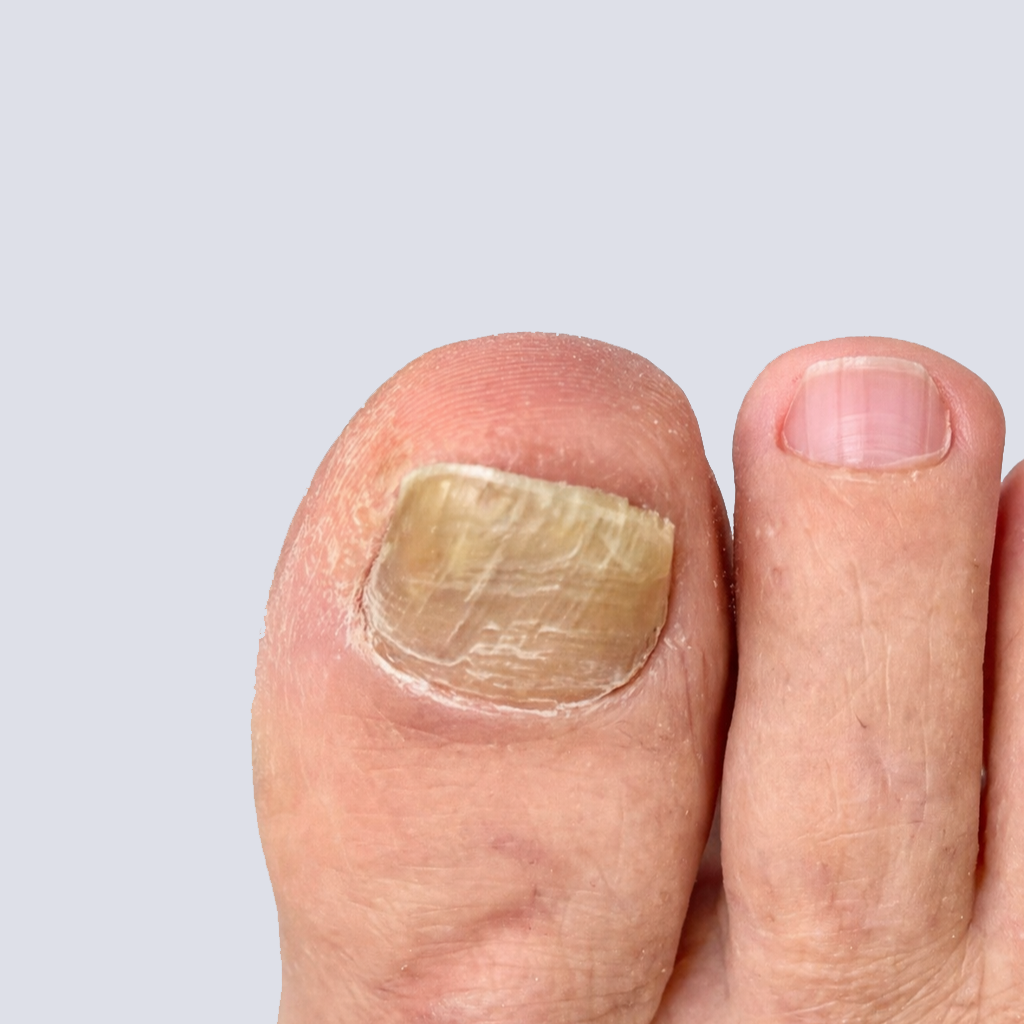
Thick Toenails
Thick toenails are a common condition that may be caused by various factors, such as trauma, fungal infections, or underlying medical conditions. In addition to their cosmetic impact, thick toenails may cause pain, discomfort, and difficulty walking if not managed properly.
Causes and Risk Factors
1. Onychomycosis
– This is the most common cause of nail thickening.
– The nail may become yellowish, brittle, and deformed.
2. Nail trauma
– Repeated minor trauma (e.g. in athletes, runners) or severe injuries may lead to thickening and changes in the shape of the nail.
3. Ageing
– With age, nails become thicker and harder due to reduced cellular turnover.
4. Psoriasis or other dermatological conditions
– These may cause thickening, discoloration, and abnormal nail growth.
5. Onychogryphosis (nail deformity)
– This is a condition in which the nails grow in a curved and hard form, often due to chronic pressure or genetic predisposition.
6. Circulatory problems or diabetes
– Poor circulation reduces the supply of nutrients to the nail, causing thickening and deformity.
Symptoms
– Increased nail thickness with a hard, uneven surface.
– Change in colour (yellowish, brown, or greyish nail).
– Difficulty trimming the nails due to their hardness.
– Tenderness or pain, especially when the nail is pressed by shoes.
– Nail detachment or deformity in advanced cases.
Management and Treatment
1. Proper care and maintenance
– Foot soak with warm water and salts to soften the nails before trimming.
– Use of specialised tools (files or nail clippers for thick nails).
– Moisturising with creams containing urea to help keep the nails softer.
2. Treatment for fungal infections (if onychomycosis is present)
– Antifungal nail lacquers, sprays, or creams.
– Oral antifungal medication in severe infections.
– Laser therapy to help accelerate recovery.
3. Professional management by a podiatrist
– Reduction of nail thickness using specialised instruments, in a painless and non-invasive manner.
– Nail bracing (orthonyxia) with the use of specialised braces to guide nail growth.
Prevention
– Wear appropriate footwear that does not compress the toes.
– Maintain good foot hygiene and trim your nails according to their natural shape.
– Avoid moisture and fungal infections through proper care and antifungal products.
– Regular visits to a podiatrist, especially if you have diabetes or circulatory problems.
When to Visit the Podiatrist
If thick toenails cause pain, make walking difficult, change colour, or show signs of infection, professional intervention is essential for proper diagnosis and treatment.
Thick toenails are a common condition that may affect both comfort and daily mobility. With proper care, timely treatment, and regular podiatric follow-up when needed, symptoms can be managed effectively and complications can be prevented.