

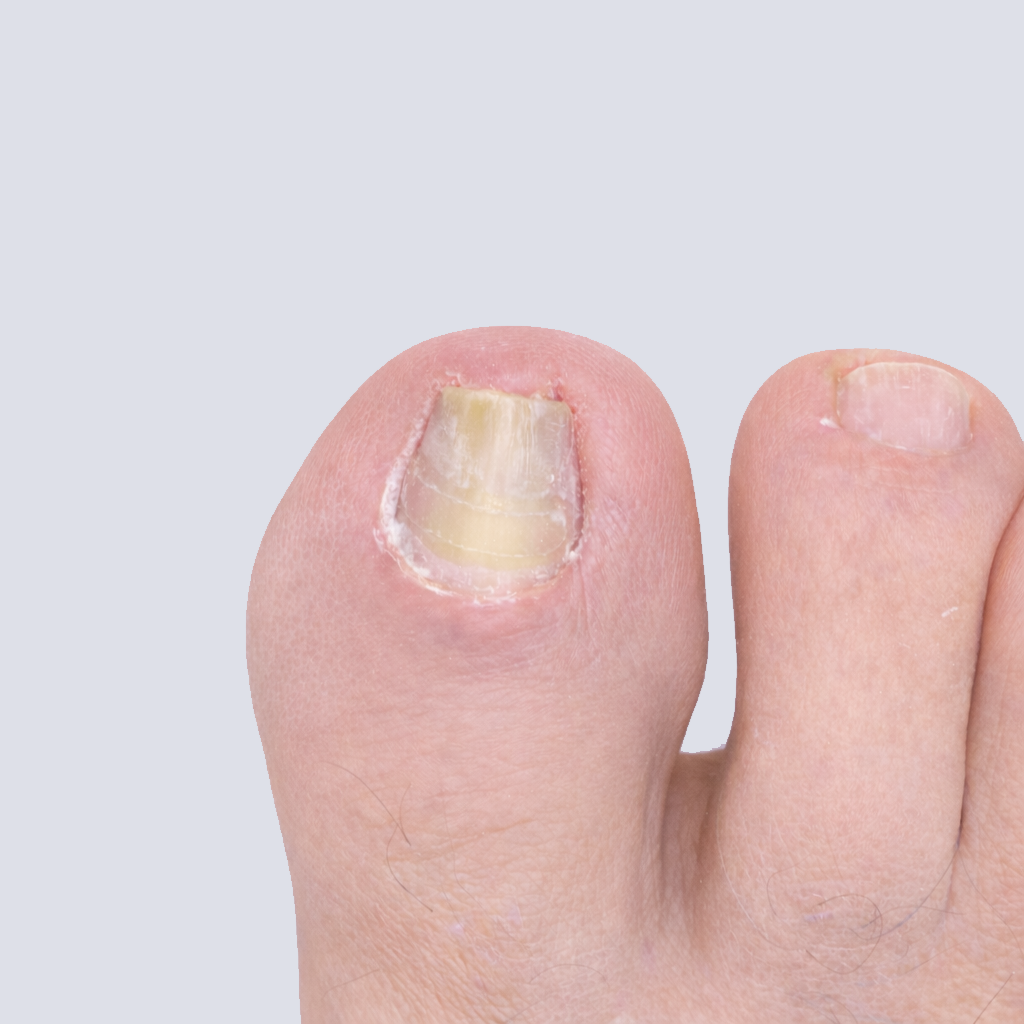
Curved Nails
Curved nails are a condition in which the toenails grow in a curved or thickened shape, often pressing against the surrounding skin. This change in nail shape may cause pain, inflammation, and an increased risk of infection if not managed properly.
Causes and Risk Factors
1. Genetic predisposition
– In some individuals, nails naturally grow in a more curved shape due to heredity.
2. Incorrect nail trimming
– If the nails are cut too short or too deeply at the sides, the risk of inward growth increases.
3. Tight or inappropriate footwear
– Shoes that place pressure on the nails may force them to grow inward or become more curved.
4. Nail trauma
– Blows or repeated minor trauma (e.g. in athletes) may affect normal nail growth.
5. Ageing and circulatory problems
– With age, nails tend to become thicker and more rigid, often changing shape.
6. Fungal infections (onychomycosis)
– Fungi may alter the structure and shape of the nail, leading to curvature.
7. Dermatological conditions
– Psoriasis or other conditions affecting the skin and nails may cause thickening and curvature.
Symptoms
– Nails that grow inward or develop a markedly curved shape.
– Pain and tenderness in the toes, especially if the nail presses against the skin.
– Redness and swelling around the nail.
– Increased risk of infection, especially if a wound develops or if an ingrown toenail (onychocryptosis) is present.
Management and Treatment
1. Self-care for mild cases
– Proper nail trimming: Nails should be trimmed according to their natural shape.
– Use of appropriate antiseptics to help prevent infection.
2. Professional treatment by a podiatrist
– Proper trimming and removal of any subungual corns.
– Nail thinning with professional instruments to relieve pressure.
– Nail bracing (orthonyxia): Application of special nail braces to help correct the nail shape.
– Treatment of fungal infections if underlying onychomycosis is present.
3. Minimally invasive management (in severe cases)
– Partial nail avulsion: Removal of part of the nail if the curvature is very pronounced and frequently causes pain.
Prevention
– Trim the nails properly according to their shape.
– Wear comfortable, breathable shoes that do not compress the toes.
– Maintain good foot hygiene to help prevent fungal infections and other infections.
– Check your nails regularly, especially if you are prone to nail curvature.
When to Visit the Podiatrist
If your curved nails cause pain, difficulty walking, signs of infection, or recurrent problems, a specialist can recommend the most appropriate solution for long-term management.
Curved nails may cause discomfort and recurrent problems if left untreated. With proper podiatric care, appropriate nail management, and timely intervention, symptoms can be relieved effectively and complications can be prevented.