

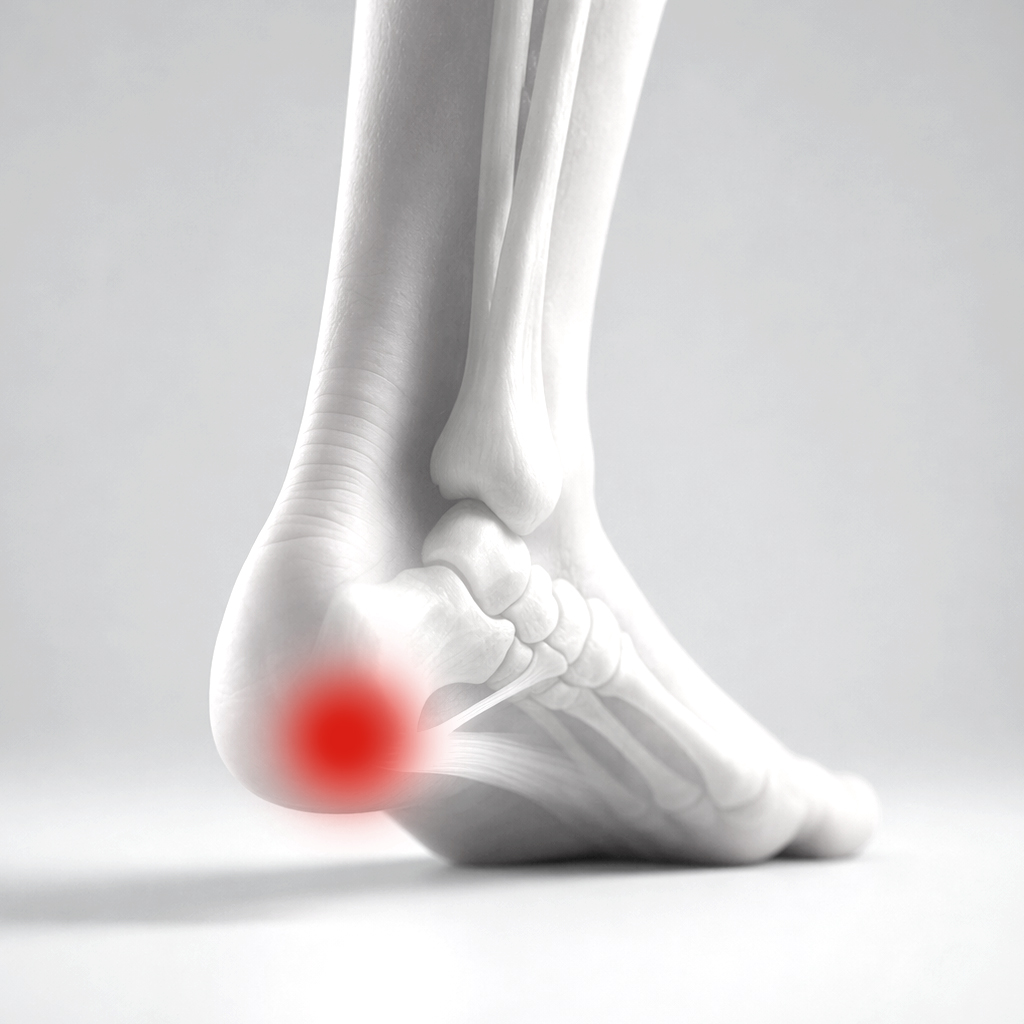
Heel Pain
Heel pain is a common problem that may be caused by various factors, such as overuse, inflammation, and musculoskeletal disorders. Depending on the cause, the pain may be mild or severe, occurring either during walking or even at rest.
Main Causes of Heel Pain
1. Plantar fasciitis
– The most common cause of heel pain.
– It is caused by inflammation of the plantar fascia, the tissue that supports the arch of the foot.
– Typical symptom: Intense pain during the first morning steps or when walking after prolonged inactivity.
2. Heel spur
– A bony growth on the underside of the heel due to chronic strain or inflammation of the plantar fascia.
– It often accompanies plantar fasciitis.
– It causes pain, especially during weight-bearing.
3. Achilles tendinitis
– Inflammation of the Achilles tendon, which connects the calf muscle to the heel.
– The pain is usually located at the back of the heel and worsens with running or prolonged standing.
4. Heel fissures (cracked heels)
– These are caused by dryness and loss of skin elasticity, resulting in cracks that may become painful.
– They are more common in individuals with genetic predisposition, obesity, diabetes mellitus, or prolonged standing.
5. Heel fat pad syndrome
– Atrophy of the natural fat “cushion” in the heel, which contributes to shock absorption.
– It is often seen in older adults or in people who place intense pressure on their heels (runners, individuals with increased body weight).
6. Injuries and stress fractures
– These may be caused by prolonged strain (e.g. running on hard surfaces) or trauma.
– The pain is usually localised and increases with pressure.
7. Neurological or systemic conditions
– Nerve entrapment (Baxter’s neuritis): Causes pain that may mimic plantar fasciitis.
– Arthritis or gout: Inflammatory conditions that may affect the joints.
Symptoms
– Intense heel pain in the morning (plantar fasciitis).
– Pain at the back of the heel (Achilles tendinitis).
– Burning sensation or numbness (possible neurological cause).
– Swelling, redness, or difficulty walking (possible inflammation or injury).
Management and Treatment
1. Conservative methods:
– Rest: Avoidance of activities that worsen the pain.
– Cryotherapy: Application of ice for 10–15 minutes, 2–3 times a day.
– Orthotic insoles: They support the arch and reduce pressure on the heel.
– Physiotherapy: Stretching exercises for the plantar fascia and the Achilles tendon.
– Footwear modification: Choosing anatomical shoes with shock-absorbing soles.
– Anti-inflammatory medication: Ibuprofen or similar preparations for pain relief.
2. Minimally invasive treatments:
– Cortisone injection: In cases of severe and persistent pain.
– Shockwave Therapy: A treatment that helps reduce inflammation.
– Laser therapy: Used to accelerate healing.
Prevention
– Maintaining a healthy weight in order to reduce pressure on the heel.
– Appropriate footwear with good shock absorption.
– Avoidance of intense activities without adequate warm-up.
– Regular stretching to maintain the elasticity of the foot muscles and tendons.
When to Visit the Podiatrist
– If the pain persists for more than 2–3 weeks.
– If you have difficulty placing weight on your foot.
– If there is significant swelling, redness, or increased warmth in the area.
– If the pain worsens despite conservative treatment.
Heel pain may have various causes, ranging from simple overuse to chronic conditions. Proper diagnosis and management are important for relieving symptoms and preventing complications.