

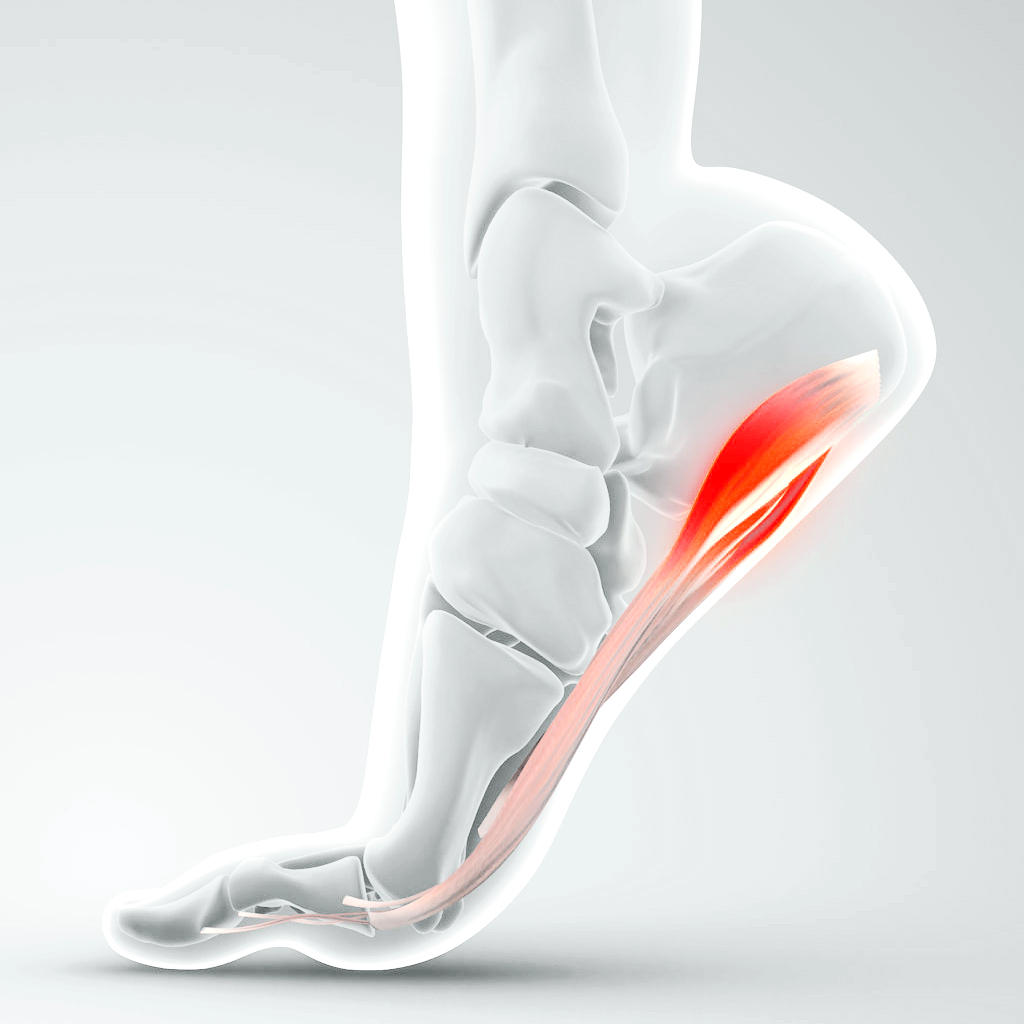
Plantar Fasciitis
Plantar fasciitis is an inflammation of the plantar fascia, the strong connective tissue that extends from the heel to the metatarsals of the foot. It is one of the most common causes of heel pain, particularly affecting people who walk a great deal or stand for prolonged periods.
Causes and Risk Factors
Plantar fasciitis is usually caused by excessive loading or strain on the plantar fascia, leading to microtrauma and inflammation.
1. Mechanical causes
– Prolonged standing or intense physical activity (e.g. running, jumping).
– Abnormal gait or imbalance in weight distribution.
– Excess body weight, which increases pressure on the plantar fascia.
2. Factors related to foot anatomy
– Flat feet or pes cavus, which cause increased pressure on the sole.
– Heel spur, which may coexist with plantar fasciitis.
3. Inappropriate footwear
– Hard or thin soles that do not absorb shock.
– High heels, which place additional strain on the plantar fascia.
4. Age and physiological changes
– Age 40–60 years, as the plantar fascia tissue gradually loses its elasticity.
Symptoms
– Intense heel pain (particularly on the inner side).
– Pain in the morning, during the first steps after getting out of bed, which decreases as the foot “warms up”.
– Worsening of pain after prolonged standing or after rest.
– A burning sensation or stiffness in the sole.
– Reduced flexibility in the arch of the foot.
Diagnosis
Diagnosis is made through:
– Clinical examination by a podiatrist or orthopaedic specialist.
– X-ray (to rule out fracture).
– Magnetic resonance imaging in very persistent cases to assess inflammation.
Management and Treatment
1. Conservative treatments
– Rest and avoidance of overuse.
– Cryotherapy: Ice for 10–15 minutes, 3–4 times a day, to reduce inflammation.
– Anti-inflammatory medication (ibuprofen, naproxen) for temporary relief.
– Physiotherapy:
– Stretching exercises for the plantar fascia and the Achilles tendon.
– Strengthening of the foot muscles for better support of the arch.
– Orthotic insoles for support, offloading, and pain relief.
– Avoidance of intense exercise and modification of activities.
2. Minimally invasive treatments for severe inflammation
– Shockwave Therapy.
– Laser therapy to reduce inflammation and accelerate healing.
Prevention
– Proper footwear with good support and shock absorption.
– Regular stretching of the plantar fascia and foot muscles.
– Weight management to reduce pressure on the sole.
– Avoidance of sudden increases in physical activity without warm-up.
When to Visit the Podiatrist
– If the pain persists for more than 2–3 weeks despite conservative treatment.
– If the pain is severe and affects daily activities.
– If there are symptoms of a heel spur or other underlying conditions.
Plantar fasciitis is a common but manageable condition. With proper diagnosis and treatment, pain can be significantly reduced, allowing a smooth return to normal daily activity.