

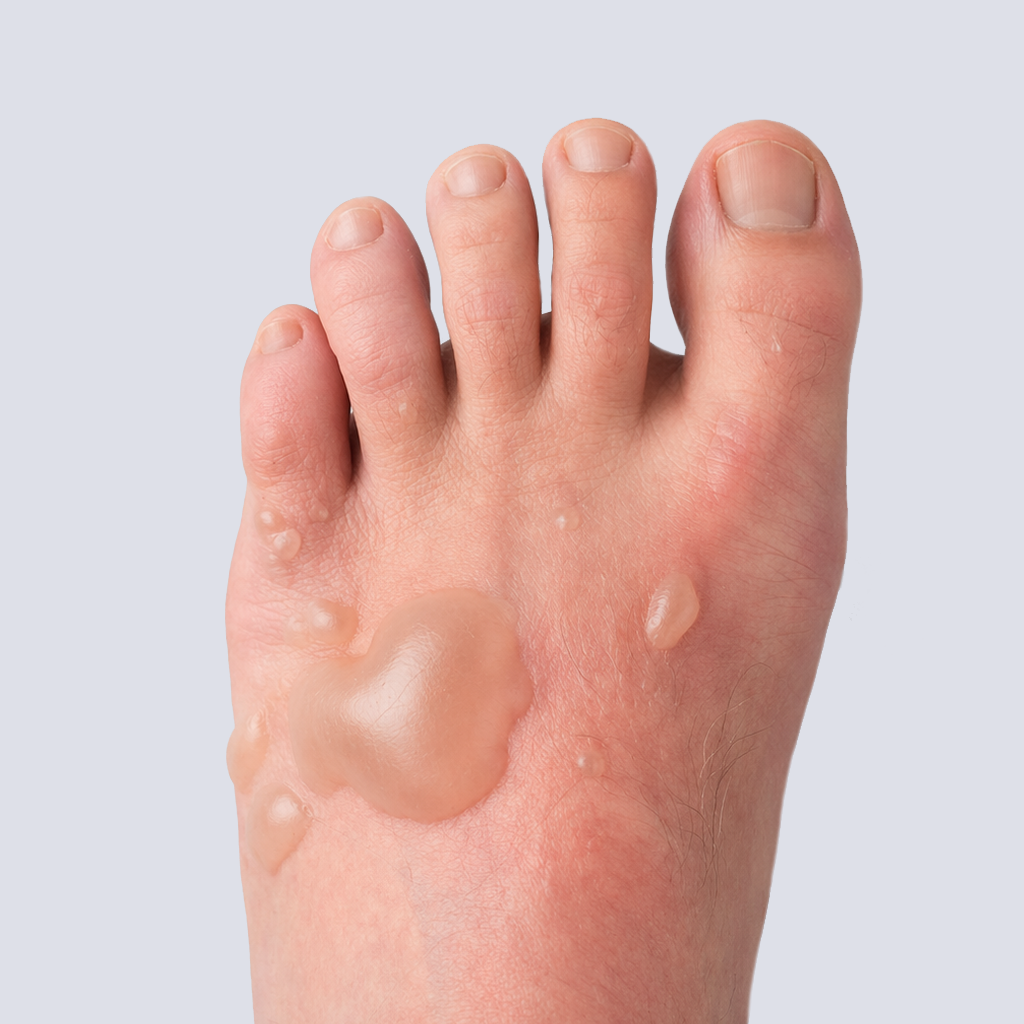
Blisters
Blisters on the feet are small or larger fluid-filled lesions that form as a result of friction, pressure, or burns. They are part of the body’s natural defence mechanism, helping protect the skin from further injury. Although they are often harmless, they can cause pain, discomfort, or even infection if not managed properly.
Causes
– Excessive friction from tight or new shoes.
– Moisture and sweating, which soften the skin and make it more vulnerable.
– Burns or sunburn, which may lead to blister formation due to thermal damage.
– Allergic reactions to shoe materials or skincare products.
– Viral or bacterial infections, such as herpes or athlete’s foot.Symptoms
– Round, fluid-filled blisters on the skin.
– Pain or tenderness in the affected area.
– In cases of infection, the blister may become red, warm, or filled with pus.How to Manage Blisters
– Do not burst blisters, as the fluid helps protect the skin and promotes healing.
– Cover the area with a special protective dressing to reduce further friction.
– If the blister is very large or painful, use a sterile single-use needle, puncture it gently from the side, and carefully drain the fluid without removing the skin covering it.
– Keep the area clean and dry to reduce the risk of infection.Prevention
– Choose footwear carefully so that it fits properly and does not cause excessive friction or pressure.
– Apply protective dressings to areas that frequently develop blisters.
– Wear moisture-wicking socks to help reduce sweating.
– Keep the feet dry by changing socks frequently and using anti-perspirant products such as powder or spray.When to Visit a Podiatrist
If a blister shows signs of infection, such as pus, redness, swelling, or severe pain, if you are unsure how to manage it yourself, or if you belong to a high-risk group, such as people with diabetes, it is advisable to seek professional care.