

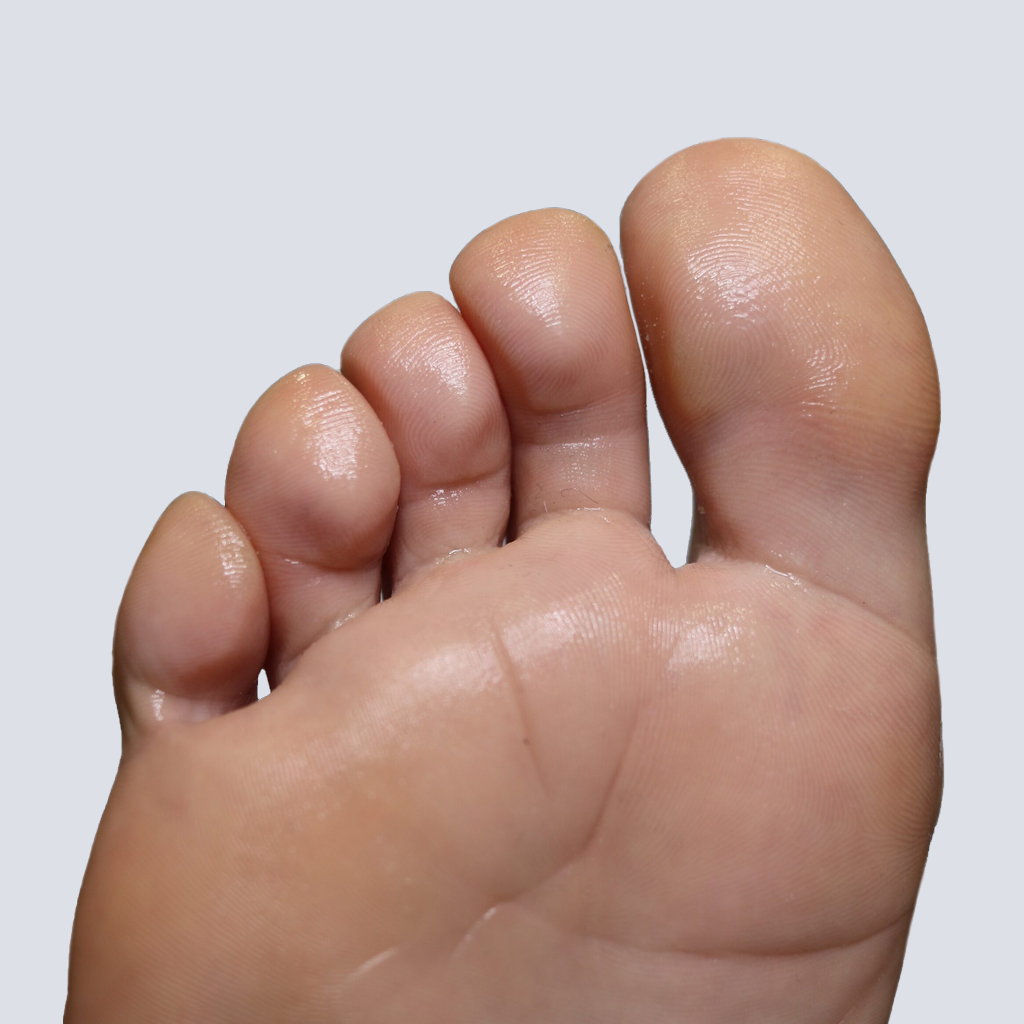
Hyperhidrosis
Foot hyperhidrosis is a condition in which the sweat glands produce more sweat than normal, even when there is no obvious reason, such as high temperature or physical activity. Although it is not dangerous, it can cause discomfort, unpleasant odour, and an increased risk of fungal or bacterial infections.
Causes and Risk Factors
– Primary (idiopathic) hyperhidrosis: This is the most common form and is usually linked to hereditary factors. The sweat glands become overactive without an obvious cause.
– Secondary hyperhidrosis: This may result from underlying medical or other conditions, such as:
– Hormonal disorders (for example, hyperthyroidism)
– Diabetes mellitus
– Neurological conditions
– Medication use (for example, antidepressants)
– Emotional stress or anxiety, which can trigger increased sweating.
– Synthetic footwear and socks, which do not allow the skin to breathe properly.Symptoms
– Excessive sweating of the feet, even in low temperatures.
– Unpleasant foot odour (bromhidrosis) caused by the breakdown of sweat by bacteria.
– Skin problems, such as soft and fragile skin, cracks, and an increased risk of fungal infections (for example, athlete’s foot).
– Moisture inside footwear, which may cause discomfort, bad odour, and difficulty while walking.Treatment and Management
– Good foot hygiene: Wash the feet with antibacterial soap and dry them thoroughly, especially between the toes.
– Avoid synthetic materials: Choose cotton socks or sports socks that absorb moisture.
– Antiperspirant sprays or powders: These contain aluminium salts, which help reduce sweat production.
– Use of special insoles: Orthotic or absorbent insoles can help reduce moisture inside the shoes.
– Botox (botulinum toxin): An injectable treatment that temporarily blocks the function of the sweat glands.
– Medication, when appropriate.
– Change socks once or twice a day.
– Wear footwear that allows ventilation, such as leather shoes or sports shoes made of breathable materials.
– Avoid spicy foods, caffeine, and alcohol, as they may increase sweating.When to Visit a Podiatrist
If hyperhidrosis affects your daily life, is accompanied by intense odour, or causes skin or other problems, such as athlete’s foot or ingrown toenails, it is important to seek professional guidance for proper treatment.