
Plantar Warts
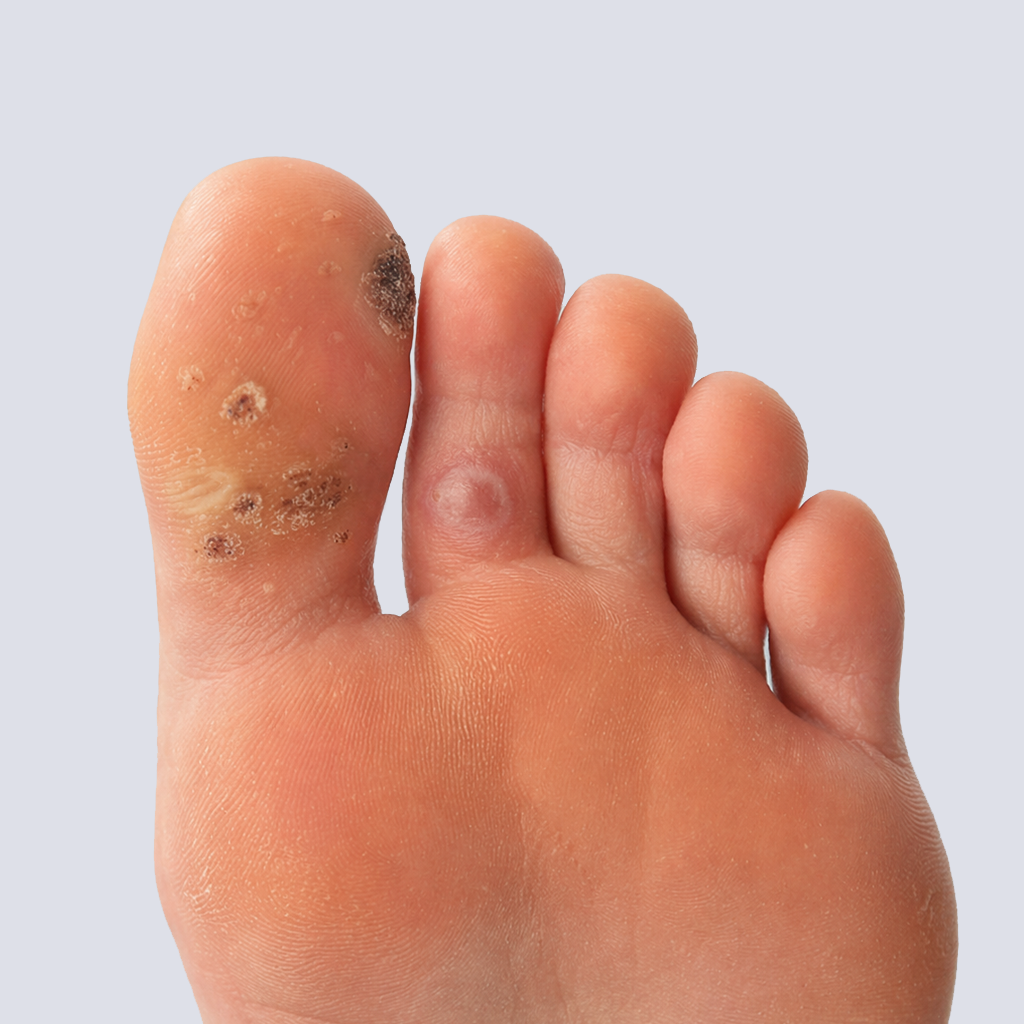
Plantar warts (verruca plantaris) are viral skin lesions caused by the human papillomavirus (HPV). They commonly appear on the soles of the feet and on the toes. They are contagious and can spread either through direct contact or through shared objects and surfaces, such as towels, shoes, or floors in public areas.
How They Develop
HPV can enter the skin through small cuts or micro-injuries. It thrives in warm, moist environments such as changing rooms, swimming pools, and gyms. People with excessive sweating or a weakened immune system are more prone to developing warts.
Symptoms
– Small, round lesions with a rough surface, often containing tiny black dots (thrombosed blood vessels).
– Pain or discomfort while walking, especially in the case of plantar warts.
– Multiple small warts that may merge into a larger lesion, known as a mosaic wart.Treatment Options
Although some warts may occasionally disappear on their own, early treatment is usually recommended in order to reduce the risk of spreading or enlargement. Treatment options include topical keratolytic agents, such as salicylic acid, cauterisation with silver nitrate, cryotherapy, and other specialised techniques, depending on the type and depth of the lesion.
Prevention
– Wear flip-flops or suitable footwear in shared areas such as swimming pools, gyms, and changing rooms.
– Maintain good foot hygiene and avoid sharing personal items such as socks or towels.
– Support the immune system through a balanced diet and adequate rest.When to Visit a Podiatrist
If warts persist, multiply, or cause pain, it is important to consult a podiatrist for an accurate diagnosis and targeted treatment, without damaging the surrounding healthy skin.