
Plantar Pressure Assessment – Orthotic Insoles
Orthotic Insoles and the Role of the Podiatrist
Orthotic insoles are customised inserts placed inside footwear, designed to support proper foot alignment, distribute pressure evenly, and reduce pain in the sole, knee, hip, or lower back. Their purpose is to improve the mechanical function of the foot during standing and walking, offering greater comfort, stability, and endurance in everyday life.
What orthotic insoles can help treat
Common indications include:
- flat feet
- pes cavus
- metatarsalgia
- plantar fasciitis
- heel spur
- knee pain related to poor biomechanical loading
- calluses and areas of hard skin caused by increased pressure on specific parts of the foot
In athletes, they help with offloading and injury prevention, while in children and older adults they contribute to stability, balance, and proper support.
How the podiatrist helps
The podiatrist assesses the foot as a whole and the way the patient walks. The process includes:
- history taking, with emphasis on pain, daily activities, and footwear
- clinical examination to assess foot anatomy, joint mobility, and areas of increased pressure
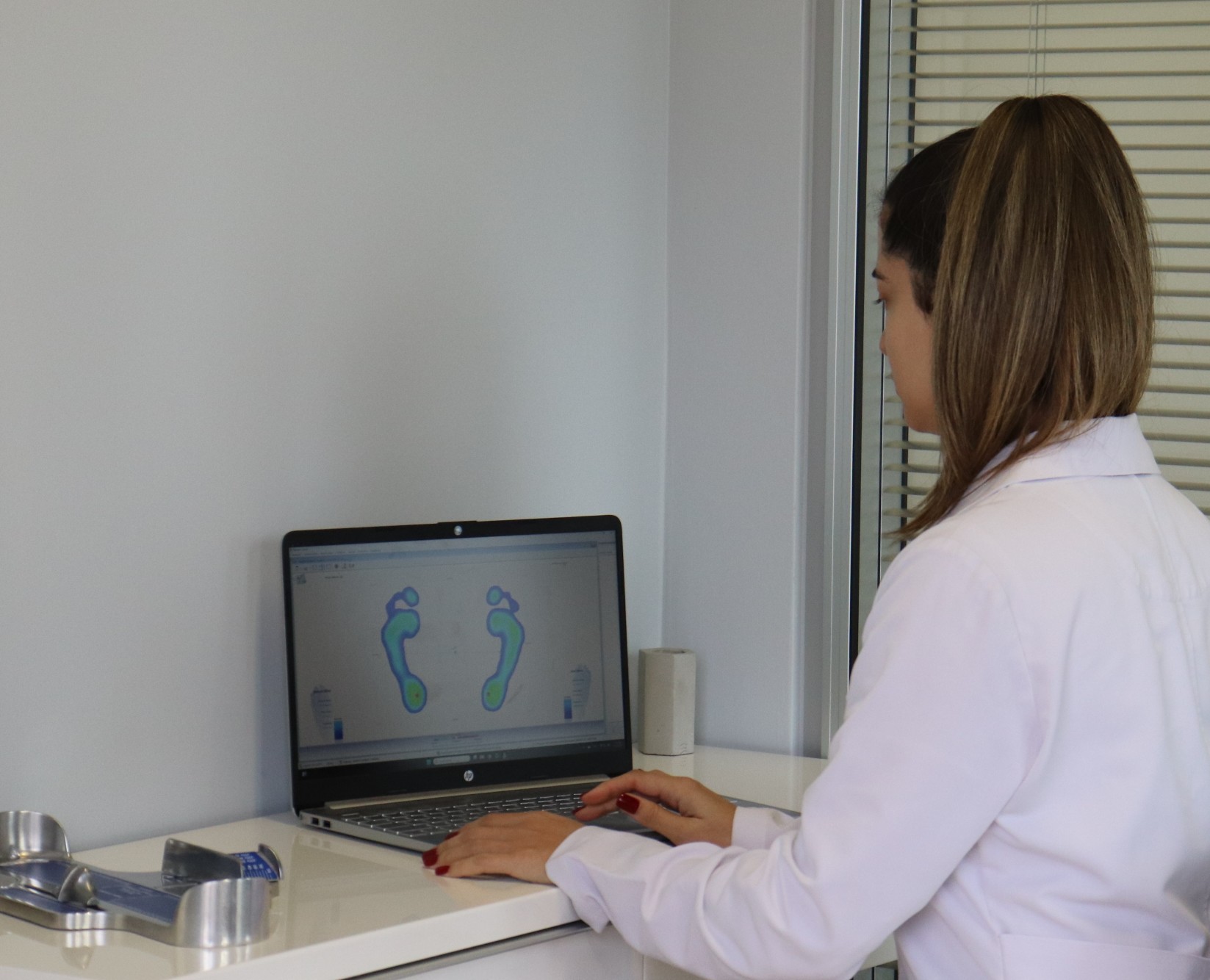
- plantar pressure assessment / gait analysis, for accurate mapping of pressure distribution and foot function
Based on the findings, an individualised plan is developed, which may include appropriate footwear selection, strengthening exercises, and the fabrication of orthotic insoles.
Customisation and fabrication
Orthotic insoles are made according to the individual needs and measurements of each patient. The firmness of the materials, the point and degree of support, as well as the offloading elements, are adjusted with precision so that the biomechanical dysfunction is corrected without causing an abrupt or uncomfortable change in gait. In this way, targeted support is provided at the right points, with comfort and functionality that last over time.What to expect from orthotic insoles
Adaptation to orthotic insoles is usually immediate, although gradual use may be needed during the first few days. The podiatrist schedules a follow-up appointment to check the fit and, if necessary, makes small adjustments so that the insole fits optimally. With proper monitoring, orthotic insoles can:
- improve body posture
- reduce pain
- prevent recurrence
- support overall mobility and function in everyday life or in sport
The success of orthotic insoles does not depend on a standardised or “ready-made” product, but on correct diagnosis and an individualised approach. The podiatrist combines clinical experience, biomechanical knowledge, and specialised tools such as plantar pressure assessment, so that the solution truly responds to your needs — with safety, effectiveness, and long-term durability. Trust the specialists and book an appointment at Podcare for targeted treatment.
📍 Platonos 1, Chalandri
📞 Contact telephone: 2106897476